

What' Sup
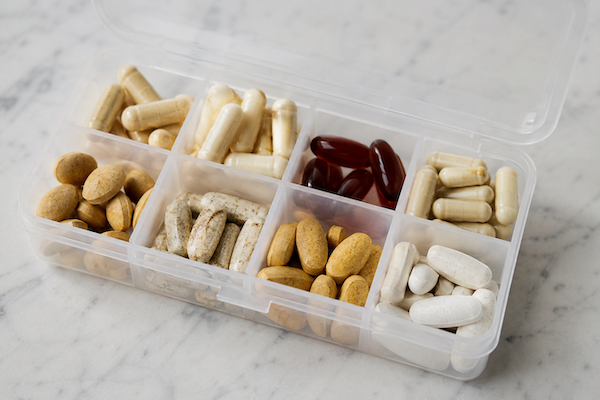
In my office, I see a range of personalities every day: some people that will explore the ends of the earth for something that gives them a survival advantage, and others who are content to wake up every morning and just take things day by day. People can generally be divided into “maximizers” and “minimizers”.
But one sentiment that seems to be more and more universal amongst both groups is a suspicion of “Big Pharma” and a desire to avoid prescription medications.
That perspective is understandable. Pharmaceutical companies have not always behaved in ways that inspire public trust. But what is most interesting to me, is how frequently the people who don’t want to take prescription medications are more than happy to take handfuls of supplements every day, out of a truly misguided belief that somehow these products are “natural” and therefore healthier.
And we are rapidly training future generations to believe in this myth, too.
A recent study looked at data from the National Health and Nutrition Examination Survey and revealed that the use of two or more dietary supplements significantly increased among youth and adults from 2013 to 2023.
During the time period of August 2021–August 2023, 35.7% of youth ages 0–19 years and 60.2% of adults age 20 and older used any dietary supplement in the past 30 days.
Among youth, dietary supplement use was actually highest among those ages 2–11 years, and overall, 11.3% of youth used two or more dietary supplements.
Overall, 38.7% of adults used two or more dietary supplements, and use increased with age.
One of the greatest ironies in modern health care is that many people fear prescription medications because they believe pharmaceutical companies are driven exclusively by profit.
Yet for some reason those same individuals often place unquestioning trust in a supplement industry worth hundreds of billions of dollars globally.
Supplements are marketed by corporations too. They have shareholders too. They advertise, influence social media, sponsor podcasts, and compete for market share.
Don’t be fooled: “Big Supplement” is a big business, and starting to rival “Big Pharma”. In fact, Americans spend approximately $70–110 billion annually on dietary and nutritional supplements.
That is a lot of pills, powders, gummies, drops, extracts, and “proprietary blends.”
But are supplements actually safer?
Are they more natural?
And, most importantly, is there actually good data to support their use?
The word “natural” has enormous marketing power. It suggests purity, gentleness, and safety. Yet cyanide, arsenic, and poisonous mushrooms are natural. So are nicotine and cocaine.
At the same time, many of the prescription medications that we use are derived from natural sources. Aspirin was developed from compounds found in willow bark. Statins trace their origins to a fungus. Digoxin comes from the foxglove plant. Colchicine from the autumn crocus plant. Botox comes from a bacteria called Clostridium. And there are innumerable more examples.
The fact that a substance originates from “nature” actually tells us nothing about whether it is beneficial or harmful.
The issue should not be whether something began in a plant, mineral, fish, fungus, or laboratory. The issue should be whether it works, whether the dose is known, whether it is safe, whether the benefits outweigh the risks, and whether the product actually contains what the label says it contains.
When you take a prescription medication, you may not like the idea of taking “a drug,” but at least the medication has gone through a defined regulatory process. The active ingredient, dose, purity, manufacturing standards, expected benefits, side effects, drug interactions, and monitoring recommendations are all studied and described.
Dietary supplements are different.
One of the biggest misconceptions is that supplements are regulated the same way prescription drugs are. They are not.
In the United States, dietary supplements are generally regulated more like foods than drugs. Manufacturers are responsible for ensuring their products are safe and properly labeled, but importantly, they do not need to go through the same pre-market approval process required for prescription medications. And they don’t have to prove effectiveness through large clinical trials before marketing them.
Bottom line: no one reviews these products before they appear on store shelves or online.
Additionally, independent testing companies have repeatedly found problems such as inaccurate ingredient amounts, contamination with heavy metals or other substances, and variability between batches. This really should not be a surprise, since China is one of the world's largest suppliers of vitamin ingredients, amino acids, botanical extracts, and other supplement components.
In fact, a landmark FDA database review found 776 dietary supplements contained hidden pharmaceutical drugs between 2007 and 2016. This means that you think you are taking something “natural”, but in reality you are actually taking a prescription med, just without the typical protective supervision. And more than half of these were never recalled, despite containing undeclared prescription medications.
When I prescribe a medication, I at least know that the dose has been standardized and tested. With many supplements, we really don’t have that certainty.
As a cardiologist, I care less about whether a tablet is labeled “supplement” or “prescription” and more about whether it improves meaningful outcomes: heart attacks, strokes, hospitalization, quality of life, and survival.
For many common supplements, the evidence is disappointing. Large randomized trials have generally failed to show meaningful cardiovascular benefit from routine use of multivitamins, antioxidant supplements, vitamin E, beta-carotene, and many other popular products.
Red yeast rice is one of the best examples of how confusing the “natural” vs prescription” conversation can become.
Many people take red yeast rice because they want to avoid statins. But the active cholesterol-lowering compound in some red yeast rice products, monacolin K, is chemically identical to lovastatin, an actual prescription statin.
But in the late 1990s and early 2000s, the FDA determined that red yeast rice products containing significant amounts of monacolin K are effectively unapproved drugs rather than dietary supplements because lovastatin had already been approved as a drug before being marketed as a supplement ingredient. And so the FDA ruled that manufacturers generally cannot legally market a Red Yeast Rice supplement based on its monacolin K content or intentionally enrich it with pharmaceutical levels of monacolin K.
Since then, the FDA has repeatedly taken action against manufacturers selling red yeast rice products that contain enhanced or standardized amounts of monacolin K, pulling these products off the shelves.
What is the result? Some red yeast rice products contain very little or no detectable monacolin K. Some contain small amounts that are naturally produced during fermentation. Some contain substantial amounts despite not disclosing them.
The actual content can vary enormously from brand to brand and even batch to batch. In fact, several analyses of commercially available red yeast rice products have found more than a 60-fold difference in monacolin K content among products sold in the United States.
So when a patient says, “I don’t want to take a statin, but I’m taking red yeast rice because it’s natural,” what they are really doing is taking an unregulated, inconsistently dosed statin. And this is the worst of both worlds: the potential side effects of a medication, without the consistency, dosing transparency, outcomes data, or monitoring structure of a prescription medication.
In this current social media-dominated world, we are often presented with a false choice: natural supplements or prescription drugs.
A better approach is evidence-based care.
Sometimes lifestyle is the best therapy. Sometimes a supplement is reasonable. Sometimes a prescription medication is the best tool.
Often the answer is a combination of diet, exercise, sleep, weight management, stress reduction, risk-factor control, and carefully selected medications.
My patients know that I do not want patients on more medication than they need. But I also do not want them undertreated because they were sold the idea that “natural” products are automatically safer than prescriptions.
The goal is not to defend, support, fight or refute pharmaceutical companies, but to prevent heart attacks, strokes and premature death.
The real question should not be whether something comes from a plant, a lab, a pharmacy, or a health-food store. The real question should be: “What is going to do the best job at helping me achieve my health goals?”
In cardiology, we have made enormous progress because we have learned how to reduce risk in measurable ways. We can lower “bad” cholesterol. We can lower blood pressure. We can prevent strokes in atrial fibrillation. We can treat heart failure. We can reduce the chance of recurrent heart attacks.
Supplements may indeed have a role in these situations. But they should not be used as a substitute for proven therapy, and they should not get a free pass simply because the label looks pretty and they use the word “natural”.
In these current times, it is really healthy to be skeptical. But we should apply this skepticism equally. Not just to prescriptions and Big Pharma, but to supplements, marketing and influencers too.
And we should certainly be skeptical of exposing our kids to these products, and instead focus on healthy diets and lots of activity.
At Wisconsin Cardiology Associates, we counsel our patients to aim for a healthy, plant-based diet, emphasizing fruits, vegetables, beans, lentils, whole grains and nuts, and aim for 30 mins of moderate intensity exercise 5-7 days/week. Have questions about the best way you can prevent heart disease? Call us and make an appointment for a consultation.
Our clinic is open and we are accepting new patients
