

The Company You Keep
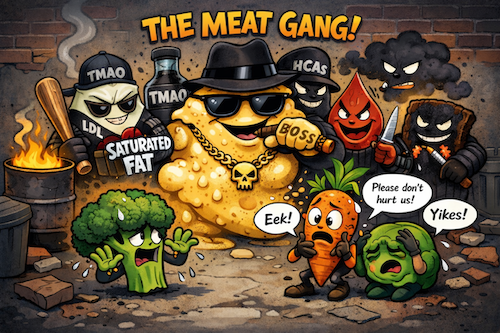
Current Health Secretary Robert F. Kennedy Jr. evidently has plans to revise the U.S. dietary guidelines to encourage more saturated fats from whole foods like meat and dairy, arguing that they've been unfairly demonized.
As all of my patients know, I like to talk about nutrition and spend a lot of time discussing the impact of diet on health with my patients.
And when I tell my patients that they should limit their intake of red meat, invariably many will say: “Oh, it’s okay, I only get the leanest cut and I trim off all the fat” or “I only eat grass-fed organic beef” or (since we live in Wisconsin) they will say “Well, I only eat venison, because it is so lean”.
The question arises: Are these approaches safe? Is RFK Jr correct in saying that saturated fat isn’t really a problem?
Recently published research has prompted a lot of discussion on this topic in the nutrition and cardiology worlds.
In this journal article, the researchers concluded that for persons at low cardiovascular risk, reducing or modifying saturated fat intake had little or no benefit over a period of 5 years.
This isn’t really that ground-breaking: Many studies have shown that the principal effect here is in the benefit of increasing plant-based unsaturated fats, not in reducing SFA.
And if you really want to get into the weeds about macronutrients, evidence was found that if high risk people reduced saturated fat and replaced it with polyunsaturated fat, you could reduce cardiovascular events.
Indeed, the only cardiovascular research trials that have ever shown reduced CV events are the studies that have involved increasing plant-based unsaturated fats. These benefits occur regardless of the nutrient that the plant-based fats replace, whether it is saturated fat, carb, or mixed nutrients with no replacement specified.
So how is it that I can feel comfortable still telling people to move in a more vegetarian or plant-based direction if it turns out that saturated fat has a neutral effect on health?
The short answer is that it’s not really just about the fat.
It’s about the company that the fat keeps. The meat itself contains several other natural substances that have been linked to poorer health outcomes—including heart disease, stroke, diabetes, and certain cancers. Some examples include:
- Cholesterol – In some people, eating foods high in cholesterol can raise their “bad” LDL cholesterol. And when meat is cooked at high heat, some of that cholesterol can also turn into more harmful oxidized forms.
- Heme iron – This type of iron, found in red meat and is the compound that makes it “red”, can promote oxidative stress (a kind of internal “wear and tear”). It can also help form chemicals in the gut that have been repeatedly linked to higher risk of colon cancer.
- L-carnitine and choline – These nutrients, abundant in meat, interact with gut bacteria to form a substance called TMAO. Higher TMAO levels have been associated with clogged arteries and a higher risk of heart attack and stroke.
In addition to what’s naturally in meat, cooking meat (especially with high heat) creates new compounds that also may increase health risks:
- Heterocyclic amines (HCAs) – These are compounds that form when meat is cooked at very high temperatures (grilling, pan-frying, broiling). Lab studies show they can damage DNA, and human studies suggest they may increase cancer risk.
- Polycyclic aromatic hydrocarbons (PAHs) – These form when fat drips onto flames during grilling or barbecuing, and smoke deposits these chemicals onto the meat. PAHs are known carcinogens.
- Advanced glycation end products (AGEs) – These build up when meat is cooked with dry, high heat (grilling, roasting, frying). AGEs contribute to inflammation and oxidative stress in the body.
- Oxidized fats and cholesterol – When you heat cholesterol, it becomes “oxidized”, and oxidized cholesterol promotes inflammation and may contribute to plaque buildup and plaque rupture in arteries.
- Oxidized proteins – High-heat cooking can also damage the proteins in meat that people are now focusing on, creating compounds that trigger inflammatory responses in the body.
And these are just a few examples of the compounds found in meat (but not in plants). So when you look at the totality of the evidence, it should make sense that even if you can prove that saturated fat isn’t that bad, meat overall is not healthy.
RFK Jr says that he wants to promote a "common sense" diet centered on whole foods, believing that saturated fat is a healthy component of a diet as long as it doesn’t come from processed sources. He points to the research like the study mentioned above that shows that saturated fats appear to have a neutral effect for most people.
But unfortunately he is ignoring all the other compounds that are in meat that have been proven to worsen health.
So when the updated Dietary Guidelines come out, don’t be surprised when all the news reports highlight the fact that limits on fat have been taken out of the recommendations, and imply (or state) that it’s now safe to eat fat.
Don’t forget that it really isn’t just the fat, but the bad company it keeps.
Our clinic is open and we are accepting new patients
